LCM Design
LCD modules consist of an LCD screen, backlight, drive IC, and PCB. Depending on the position of the drive IC, they can be classified into COP (Chip on Plastic), COG (Chip on Glass), and COF (Chip on Film).
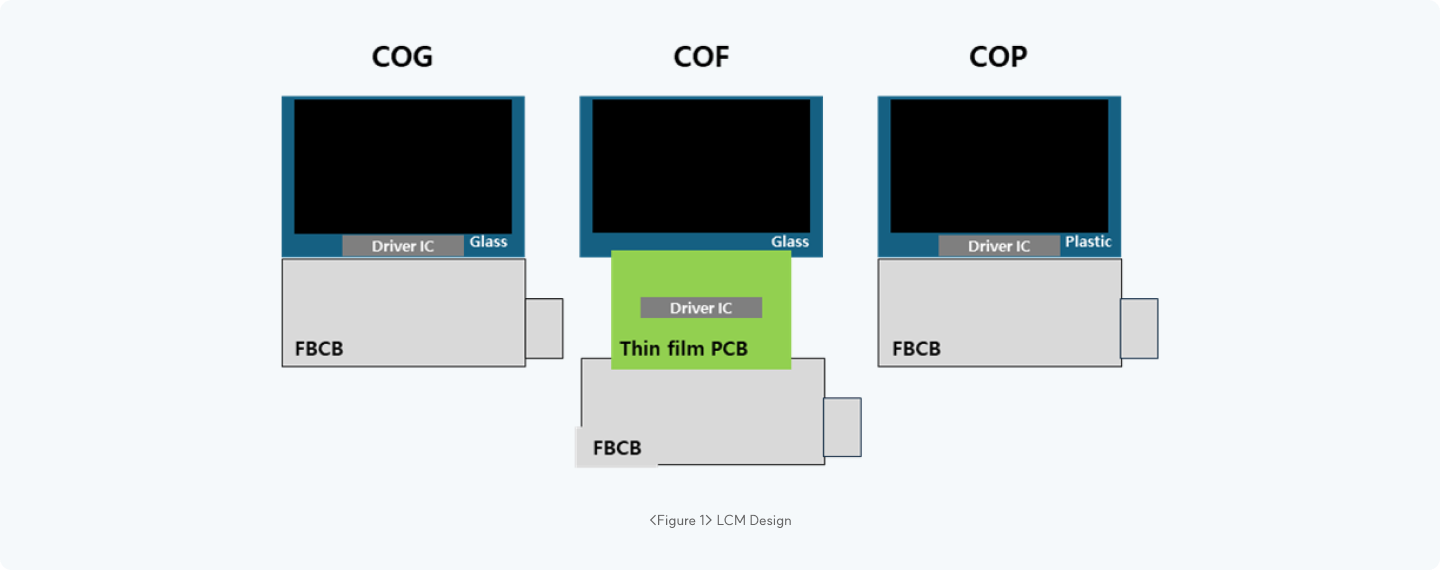
COG is a method of directly mounting the drive IC onto the display glass substrate. COF refers to a film on which the drive IC is mounted, and this film connects the display substrate to the FPCB. Since it is attached as a thin film, the film can be rolled or folded, allowing for flexible designs that reduce the thickness or size of the product where the panel is installed. COP is a method of directly attaching the drive IC to the flexible polyimide used as the display substrate. COF and COP are mainly used for flexible displays and full screens by attaching the drive IC to flexible material films and polyimide substrates. By applying flexible materials, they offer excellent space utilization, such as reducing the top and bottom bezels of a product.
COG and COP LCD technologies offer unique advantages suitable for various application fields. COG LCDs are ideal for small and lightweight devices, providing high reliability and cost-efficiency in mass production.
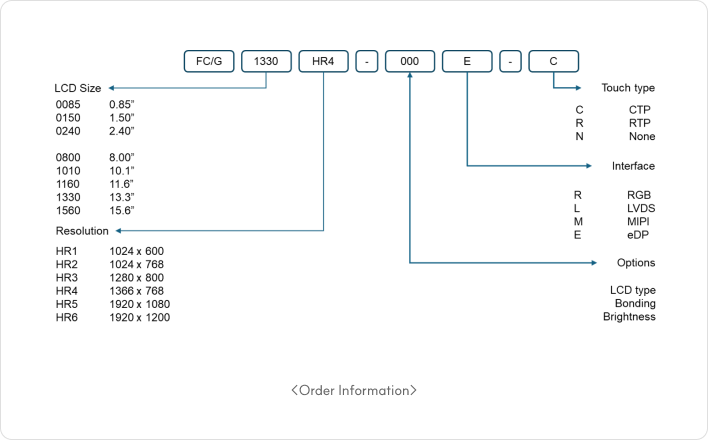
COP LCD order specifications provide design flexibility and robust performance, making them suitable for customized and industrial applications. When choosing between COG and COP LCDs, it is important to consider the specific requirements of the application and the benefits offered by each technology.